Shibuya Sky
By Andrew Liyan · Last updated: June 26, 2026
- Area
- Shibuya
- Best For
- Views, Photography, Couples
Visiting Shibuya Sky
Shibuya Sky is one of Tokyo's most spectacular observation experiences, offering sweeping open-air views above the heart of Shibuya from the rooftop of the modern Shibuya Scramble Square tower. Rising 229 meters above one of the busiest districts in the world, the attraction combines panoramic skyline views, immersive design, sunset scenery, and direct views over Shibuya Crossing to create one of the city's most memorable modern attractions.
Unlike many observation decks in Tokyo, Shibuya Sky feels remarkably open and exposed to the city around it.
Most observation towers place visitors behind glass windows indoors. Shibuya Sky instead places guests on a fully open-air rooftop high above Tokyo with nothing separating them from the skyline except the edge of the building itself. The result feels far more immersive and dramatic, especially during sunset and nighttime visits.
The experience begins long before reaching the rooftop.
Visitors first pass through a series of carefully designed interior spaces using lighting, digital visuals, reflections, and sound to gradually build anticipation before ascending higher into the tower. The transition from the crowded streets of Shibuya to the calm elevated atmosphere above the city is intentionally designed as part of the experience itself.

At the top, the Sky Edge rooftop becomes the highlight for nearly every visitor.
The outdoor observation area wraps around the top of the building with completely unobstructed panoramic views across Tokyo in every direction. Looking down directly toward Shibuya Crossing from 229 meters above street level creates one of the most iconic perspectives anywhere in the city.
The contrast between the organized movement below and the quiet open-air rooftop above is especially striking.
On clear days, visitors can see many of Tokyo's major landmarks from the rooftop including Tokyo Tower, Tokyo Skytree, and the vast urban sprawl stretching across the Kanto Plain. During winter months and particularly clear evenings, Mount Fuji often appears on the western horizon rising above the city skyline.
Sunset is considered the best time to visit.

Watching Tokyo transition from daylight into a glowing sea of illuminated buildings while standing outdoors above the city creates one of the most cinematic experiences in Tokyo. The skyline gradually shifts from soft evening light to dense neon illumination as Shibuya Crossing and surrounding skyscrapers begin lighting up below.
Because of this, sunset entry slots are among the hardest tickets to secure.
The rooftop also includes several photography areas that have become highly popular on social media. The rooftop swing overlooking the skyline is one of the most recognizable features, while wide open viewing angles create exceptional opportunities for skyline photography both during the day and after dark.
Despite its popularity, Shibuya Sky often feels more modern and less crowded than some of Tokyo's larger observation towers.

Its direct connection to Shibuya Station also makes it one of the easiest observation decks in the city to access without long transfers or complicated navigation.
For first-time visitors to Tokyo, Shibuya Sky offers one of the best ways to understand the scale, density, and energy of the city from above. The combination of open-air rooftop views, sunset atmosphere, direct views over Shibuya Crossing, and central location makes it one of Tokyo's most rewarding modern attractions for photographers, couples, and international travelers alike.
Things to Do at Shibuya Sky
Watch the Sunset Over Tokyo
Sunset is the most popular time to visit Shibuya Sky. Watching Tokyo transition from daylight into a sea of city lights from the open-air rooftop creates one of the best skyline experiences in Japan.
Look Down Over Shibuya Crossing
One of Shibuya Sky's biggest highlights is the direct aerial view over Shibuya Crossing far below. The perspective from 229 meters above the intersection offers one of Tokyo's most iconic city views.
Experience the Open-Air Rooftop
Unlike many observation decks in Tokyo, Shibuya Sky is fully open-air with no glass barriers blocking the skyline. The rooftop atmosphere feels much more immersive and exposed to the city around you.
Photograph Tokyo Tower and Tokyo Skytree
On clear days, both Tokyo Tower and Tokyo Skytree are visible from the rooftop. The wide panoramic views make Shibuya Sky one of Tokyo's best photography locations for skyline shots.
See Mount Fuji on Clear Days
During winter and especially clear evenings, Mount Fuji can sometimes be seen rising above the western horizon beyond the Tokyo skyline.
Sunset visibility is usually best during colder months.
Take Photos at the Rooftop Swing
The rooftop swing overlooking the skyline has become one of Shibuya Sky's most photographed features. Evening and sunset lighting create especially dramatic photo opportunities here.
Visit After Dark for Night Views
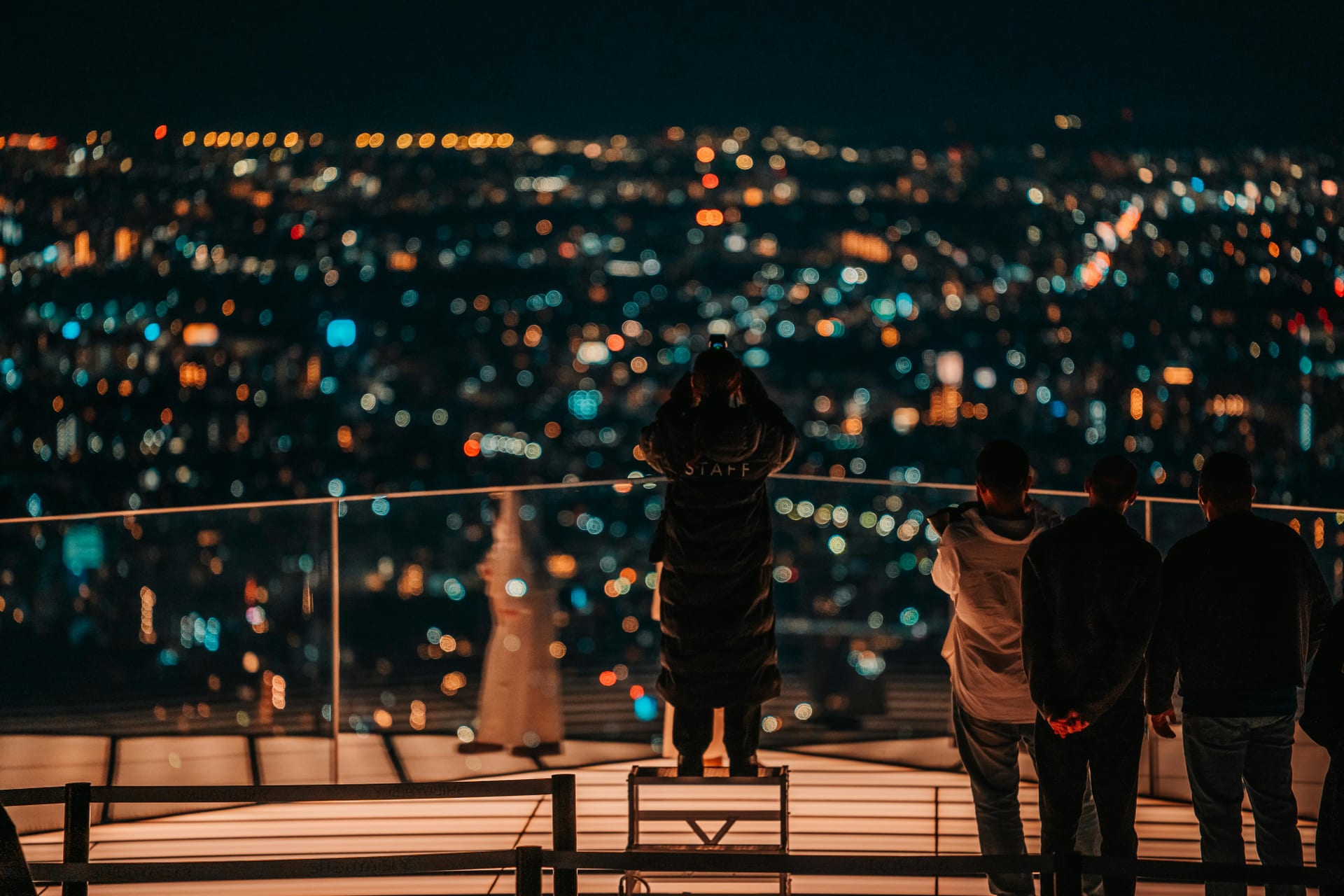
Tokyo's nighttime skyline is one of the biggest reasons to visit Shibuya Sky. Illuminated skyscrapers, neon districts, moving traffic, and the glow of Shibuya Crossing create a spectacular atmosphere after sunset.
Explore Shibuya Scramble Square Below
Shibuya Sky sits atop Shibuya Scramble Square, which also contains restaurants, cafés, shopping floors, and observation lounges. Many visitors combine the rooftop visit with shopping or dinner inside the complex afterward.
How to Get to Shibuya Sky
Shibuya Sky is located at the top of Shibuya Scramble Square directly above Shibuya Station, making it one of the easiest observation decks in Tokyo to access by train. Because of its central location in one of Tokyo's busiest districts, many visitors combine Shibuya Sky with Shibuya Crossing, Harajuku, Omotesando, or nearby shopping and nightlife areas during the same day.
The entrance to Shibuya Sky is inside the Shibuya Scramble Square complex.
From Tokyo Station
Traveling from Tokyo Station to Shibuya generally takes around 20 to 30 minutes depending on train routes and transfer timing.
Most visitors use the JR Yamanote Line directly to Shibuya Station before walking into Shibuya Scramble Square.
From Shinjuku
Shibuya Sky can usually be reached from Shinjuku in around 10 to 15 minutes using the JR Yamanote Line or other major train connections.
The route is simple and commonly used by both tourists and local commuters.
From Harajuku
Traveling from Harajuku to Shibuya generally takes around 5 to 10 minutes by train or around 20 to 30 minutes on foot.
Many visitors walk between Harajuku and Shibuya through Cat Street or Omotesando before visiting Shibuya Sky for sunset or nighttime views.
From Asakusa
Visitors traveling from Asakusa can usually reach Shibuya Sky in around 35 to 45 minutes depending on subway routes and transfer timing.
The journey connects Tokyo's traditional eastern districts with one of the city's most modern urban centers.
From Narita or Haneda Airport
Shibuya is accessible from both Narita and Haneda airports using Tokyo's rail network.
From Haneda Airport, travel time generally takes around 35 to 50 minutes. From Narita Airport, the journey usually takes around 75 to 90 minutes depending on train services and transfers.
Because Shibuya is one of Tokyo's main transportation hubs, airport access is relatively straightforward.
Closest Station to Shibuya Sky
The closest station is Shibuya Station. Shibuya Sky is directly connected to the station through Shibuya Scramble Square.
Visitors should follow signs for "Shibuya Scramble Square" and "Shibuya Sky" after exiting the station.
Arriving at Shibuya Sky
The experience begins inside Shibuya Scramble Square where visitors enter the observation deck area before ascending through several interior spaces designed to gradually introduce the skyline experience.
The transition from the crowded streets below to the open rooftop atmosphere above is intentionally designed as part of the attraction itself.
Important Visitor Tips Before Arriving
Sunset tickets are the most popular and often sell out in advance, especially during weekends and holiday periods.
Booking online ahead of time is strongly recommended for sunset and nighttime visits.
Because the rooftop is fully open-air, strong winds and weather conditions can sometimes affect access to certain rooftop areas. Loose items, large bags, and tripods may be restricted during the rooftop portion of the experience.
For IC cards, tickets, and full transit basics for Tokyo, see the complete transportation guide.
See the Getting Around Tokyo guide →Best Time to Visit Shibuya Sky
Sunset for the transition from day to night views over the city.
Entry Fee for Shibuya Sky
| Category | Price (JPY) | Approx. (USD) |
|---|---|---|
| Adult, before 3 PM | ¥2,700 | ~$17 |
| Adult, 3 PM onward | ¥3,400 | ~$21 |
| Category | Price (JPY) | Approx. (USD) |
|---|---|---|
| Adult, before 3 PM | ¥3,000 | ~$19 |
| Adult, 3 PM onward | ¥3,700 | ~$23 |
Children's tickets (elementary school and under) are sold only at the counter on the day of visit, and free for children under 5. If adult tickets sell out online, counter tickets also become unavailable. Source: GO TOKYO official tourism guide. USD amounts are approximate and change with the exchange rate.
- •Shibuya Sky is directly connected to Shibuya Station via Shibuya Scramble Square and is fully elevator accessible.
- •The open-air rooftop level may close temporarily during severe weather; check the official site for live status.
Nearby Attractions
Combine with Shibuya Sky on the same day

Shibuya Crossing

Hachiko Statue

Harajuku and Takeshita Street

Meiji Shrine

Omotesando
Frequently Asked Questions
Planning Your Tokyo Trip?
See the full Tokyo destination guide or browse Japan itineraries that include this city.
See all Towers & Views across Japan →